

close
Choose Your Site
Global
Social Media
Views: 0 Author: Site Editor Publish Time: 2026-10-11 Origin: Site


Investing in a neon open sign is a direct play for increased foot traffic. However, poor placement can quickly neutralize its return on investment. Glare, physical obstructions, or limited viewing angles easily render the brightest signs invisible.
Visibility is not just about raw brightness. You must strategically align your signage according to pedestrian lines-of-sight, vehicular traffic speeds, and your storefront architecture. Placing a sign haphazardly often leads to missed customer opportunities. Before finalizing a purchase, businesses must evaluate their physical layout.
You will learn how to determine the correct sign specifications, choose the right mounting hardware, and pinpoint the optimal installation location. We will guide you through maximizing visibility for your specific storefront. Careful planning ensures you capture every passing glance effectively.
Storefront windows offer the most cost-effective visibility but require strategic positioning to avoid glass glare and tint reduction.
Optimal viewing distance dictates sign size; rule of thumb dictates 1 inch of letter height per 10 feet of required visibility distance.
Exterior placement maximizes reach but demands specific weatherproof (IP67) ratings and adherence to local municipal zoning laws.
Final purchasing decisions (backing style, dimmer options, mounting kits) must be dictated by the chosen installation environment.
Your first major decision involves choosing between an indoor window display and an exterior wall mount. You must determine which location offers the longest unobstructed sightline to your target demographic. Sidewalk pedestrians consume information differently than highway drivers. You need to analyze the primary way customers approach your building before choosing a placement strategy.
A window installation represents the most common approach for retail stores. It protects your signage from harsh weather conditions. It also requires no special municipal permits in most jurisdictions. You gain easier access to standard power outlets indoors, simplifying the installation process. Many businesses prefer indoor placement for these logistical advantages alone.
However, window placement carries specific risks. Daylight glare heavily impacts visibility. Window tints or UV films can reduce the perceived brightness of LED neon signs by up to 30%. You might need to compensate by purchasing a high-lumen model. Reflections from nearby streetlights or passing cars can also obscure the text during evening hours.
Outside the storefront, exterior placement offers distinct benefits. You encounter zero glass obstruction. You can capture parallel foot traffic effectively by mounting the display as a projecting blade sign. Exterior positioning removes the barrier between your message and the viewer, often resulting in a bolder visual impact.
Exterior mounting does demand strict compliance protocols. You must ensure weatherproofing compliance, typically requiring an IP67 rating. Professional hardwiring is often necessary to safely route power outdoors. You must also adhere strictly to landlord agreements and city signage ordinances, which sometimes restrict illuminated outdoor displays.
Comparison Chart: Window vs. Exterior Placement
Placement Factor | Storefront Window (Indoors) | Exterior Wall (Outdoors) |
|---|---|---|
Weather Protection | Excellent (Climate controlled) | Poor (Requires IP67 rating) |
Visibility Obstructions | Glass glare, UV tints, reflections | Zero glass interference |
Installation Difficulty | Low (Standard outlets) | High (Hardwiring often needed) |
Permit Requirements | Rarely required | Frequently required by city codes |
A brilliantly bright display becomes useless if the font is too small to read at operational speeds. Feature-to-outcome evaluation is critical here. You cannot assume a standard size fits every location. Drivers passing at 45 miles per hour need much larger text than pedestrians strolling along a sidewalk.
Industry professionals rely on a proven visibility formula. You should apply the standard typography rule: 1 inch of letter height equals roughly 10 feet of readability distance. If you want customers to read your sign from 100 feet away, your letters must be at least 10 inches tall. This mathematical approach removes guesswork from the purchasing process.
Scaling appropriately between vehicular and pedestrian traffic dictates your success. You must measure the distance from your storefront to the primary traffic artery.
Foot Traffic (0-50 feet): Standard 15-inch to 24-inch displays are sufficient for sidewalk-facing stores. Pedestrians have ample time to process the information, making smaller typography highly effective.
Slow Street Traffic (15-30 MPH, 50-100 feet): You need medium-sized displays (24-inch to 30-inch) to capture attention. Drivers need larger text to comprehend the message quickly while focusing on the road.
Highway Traffic (30+ MPH, 100+ feet): This scenario requires high-lumen, oversized signs (30+ inches). You must mount these higher on the facade to avoid visual clutter from parked cars and street signs.
Do not underestimate the impact of speed on readability. Fast-moving vehicles reduce the time a driver has to read your message to mere seconds. Oversizing your text slightly provides a safety margin for visibility. When businesses take the time to learn about us and our sizing methodologies, they often realize their initial size estimates were too small.
Hanging a display dead-center in your front window rarely serves as the optimal approach. Implementation realities dictate a more nuanced strategy. You must consider how people physically move past your property. Flat-facing window displays are frequently missed by pedestrians walking parallel to the storefront.
Viewing angles play a pivotal role in capturing attention. You should position signs perpendicular to the primary flow of traffic whenever possible. A projecting blade orientation intercepts the viewer's line of sight directly. If you must mount the display flat against a window, position it near the entrance door where foot traffic naturally converges and slows down.
Elevation strategies are equally important for overcoming visual barriers. You must factor in parked vehicles, street furniture, and seasonal foliage. Standard placement is generally 5 to 7 feet from the ground. This height directly aligns with eye level for the average pedestrian, creating an immediate, intimate connection.
Elevated placement (8+ feet) becomes necessary under specific conditions. If your storefront sits behind a parking lot, cars will block low-hanging displays. Street foliage, such as low tree branches or bushes, also obscures eye-level signage. Elevating the display ensures it remains visible over these common environmental hurdles. You should step back to the street edge and crouch slightly to simulate a driver's perspective when testing elevation.
Decision-stage buyers must account for the physical realities of mounting hardware before ordering. Conducting a proper risk assessment prevents installation delays. You need to ensure your chosen location supports the physical weight and wiring needs of the hardware.
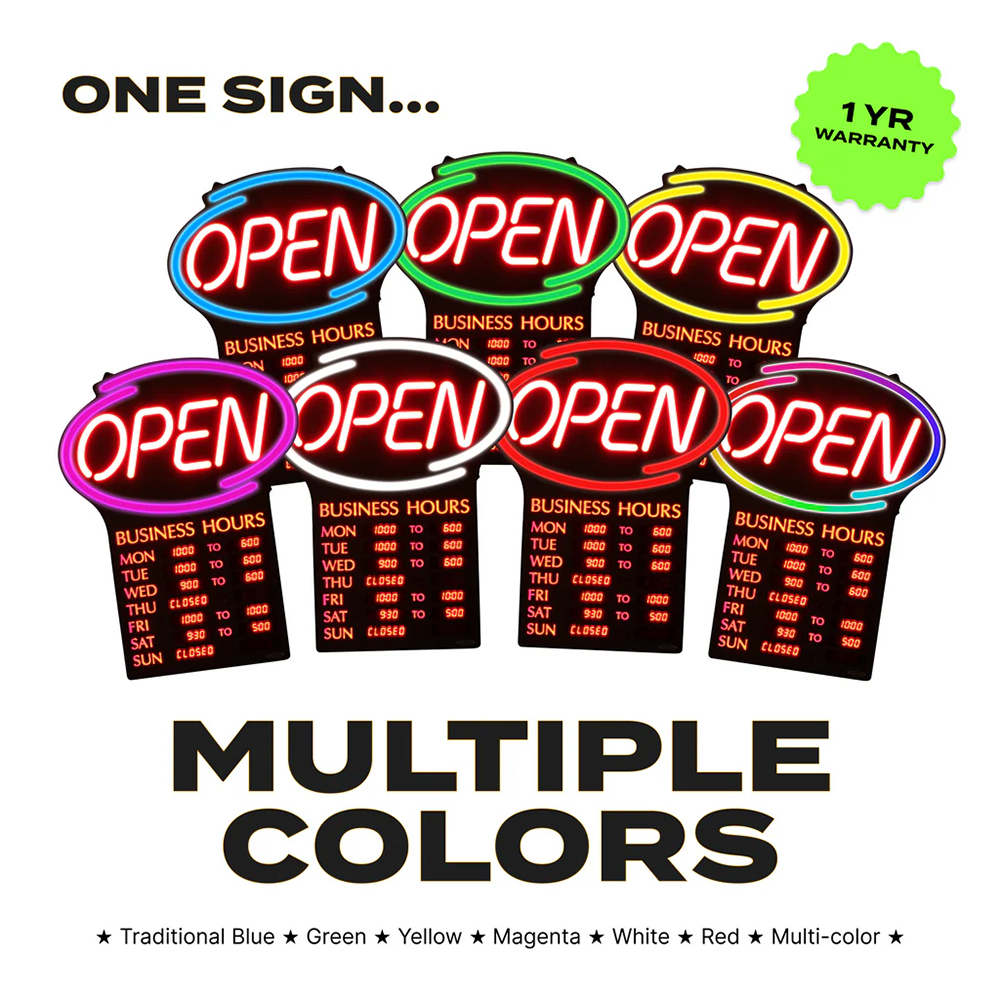
Mounting methodologies vary based on the backdrop material and location. Suspension chains or wire cables work best for windows. They allow easy height adjustment. However, suspended displays can sway in high-draft areas near frequently opened doors. If you purchase an LED open sign with business hours stickers, ensuring it hangs perfectly still prevents the smaller text from blurring.
Wall standoffs offer a distinct alternative. They work best for solid backdrops like drywall, brick, or wood. Standoffs provide a secure, premium flush-mount aesthetic. They prevent swaying and create a clean, modern look. You will need a drill and appropriate wall anchors to utilize standoffs correctly.
Power and cable management heavily influence the final aesthetic. You must assess the distance to the nearest electrical outlet. Hanging a beautiful display becomes counterproductive if an ugly black extension cord drapes across your window. You should specify if you need transparent power cords. Cable raceways help hide wiring along window frames. Professional hardwiring kits provide the cleanest look but require licensed electricians.
Heat and safety considerations clearly favor modern technology. Traditional glass neon utilizes high voltage, remains incredibly fragile, and produces significant heat. You cannot safely hang traditional glass within reaching distance of customers. LED alternatives operate on low voltage. They are shatter-resistant and cool to the touch. This makes LED technology perfectly safe for low-hanging placement near doorways or checkout counters.
Your shortlisting logic must align the physical environment with exact product specifications to finalize the purchase correctly. You cannot separate the location from the product features. The environment dictates exactly what you need to buy.
Backing options significantly affect readability. Clear acrylic backings work perfectly for windows because they maintain daylight visibility inside the store. They prevent the display from blocking natural light. For solid walls, you should choose a solid color or mirrored backing. This increases contrast and hides the wall texture behind the letters.
Brightness and control features are heavily location-dependent. If you place a neon open sign in a west-facing window, it faces intense afternoon sun. A remote dimmer becomes mandatory. You need maximum daytime lumens to compete against the sun. Conversely, you must reduce intensity at night to avoid blinding drivers or annoying neighbors.
Your next-step action involves matching these criteria to a specific configuration. You must select the appropriate size based on your calculated viewing distance. You must verify the waterproof rating if planning an exterior mount. Finally, you must add the correct mounting kit to your cart based on your window or wall surface.
The effectiveness of illuminated storefront signage relies entirely on matching technical specifications to the physical realities of the mounting location. Size, brightness, and backing style must align with your environmental challenges. Overcoming glass glare, viewing angles, and distance scaling ensures your investment actually drives foot traffic.
Take action today by measuring your intended space meticulously. Check your window tint levels to anticipate any brightness reduction. Review the distance to your nearest power source before finalizing your configuration. Evaluating these practical elements guarantees your display captures maximum attention from the moment you turn it on.
A: No. Even under an awning, indoor signs remain highly vulnerable to humidity and condensation. Moisture easily penetrates the casing, causing electrical shorts. We strongly recommend IP67-rated waterproof signs for any exterior use, regardless of overhead cover or climate conditions.
A: You should mount the display as flush to the glass as physically possible. Leaving a gap creates reflection angles. Alternatively, using a matte black backing board absorbs rear light spillage, preventing the illumination from bouncing back into your interior space.
A: Heavy metallic or dark window tints severely cut light transmission. They easily reduce brightness by up to 30%. You should compensate by upgrading to ultra-bright LEDs. If the tint remains too dark, we recommend moving the placement to the exterior facade.
A: Generally, no. Municipalities rarely require permits for signs placed indoors behind glass. However, you must verify your local codes. Some strict municipalities restrict flashing lights or specific colors, even if they remain inside the building.


