

close
Choose Your Site
Global
Social Media
Views: 0 Author: Site Editor Publish Time: 2026-10-08 Origin: Site


Every retail storefront relies on one crucial element to bring customers through the door: visibility. A glowing "OPEN" sign does more than just indicate your operating hours. It actively captures foot traffic, catches the eye of distracted passersby, and establishes your brand presence directly from the street. However, business owners now face a major decision point. Do you invest in the traditional appeal of authentic glass neon, or do you choose the modern ubiquity of LED alternatives?
Both options serve the same fundamental purpose but deliver vastly different results. In this article, we provide an objective, evidence-based breakdown of these two popular choices. You will learn how they compare regarding upfront costs, safety standards, routine maintenance, and overall visual impact. By the end, you will have all the information needed to confidently choose the right signage investment for your unique business location.
Material & Tech: Traditional neon relies on electrified gas in fragile glass tubes; LED open signs use light-emitting diodes housed in durable silicone or acrylic.
Total Cost of Ownership (TCO): LED signs have a lower upfront cost and consume 50-70% less energy, whereas traditional neon requires a higher initial investment and specialized maintenance.
Visual Impact: Neon offers a classic, 360-degree warm glow ideal for vintage branding; LEDs provide intense, directional brightness with dynamic flashing capabilities for high-street visibility.
Installation & Safety: LED signs operate on low voltage and are lightweight/shatterproof, making them easier to install and compliant with most standard storefront safety policies.
Understanding your signage requires a brief look at the engineering behind the glow. The manufacturing processes for these two displays could not be more different. One relies on century-old artisanal craftsmanship. The other utilizes modern solid-state electronics.
Traditional illuminated displays rely on specialized chemistry and physical craftsmanship. Technicians heat straight glass tubes over intense open flames. They carefully hand-bend the glass to match specific lettering patterns. Once shaped, they pump inert gases inside the sealed tube. Neon gas produces a brilliant red hue. Argon gas mixed with a drop of mercury produces blue. Fabricators use interior phosphor coatings to create other colors.
A high-voltage transformer then sends an electrical current through the gas. This current excites the gas molecules, causing them to emit visible photons. This intricate process requires extensive manual labor. Consequently, production takes significant time and drives up the final retail price. You pay directly for human artistry.
Modern alternatives discard glass and gas entirely. A standard LED open sign utilizes tiny light-emitting diode chips. Factories mount these chips onto a rigid acrylic backing board. They then cover the diodes using flexible, colored silicone tubing. This silicone acts as a diffuser. It scatters the intense pinpoint light to mimic a continuous glowing tube.
This solid-state technology allows for rapid mass production. Machines assemble the internal components quickly. The absence of hand-blown glass drastically lowers manufacturing barriers. Manufacturers can produce thousands of identical units in a single day. This efficiency translates to highly affordable retail prices for business owners.
Common Mistake: Many buyers assume "faux neon" uses real gas trapped in plastic. It does not. It is simply a string of small light chips covered by a frosted silicone casing.
Your sign must perform well under various lighting conditions. A display looks completely different at noon than it does at midnight. The aesthetic vibe also dictates how passing customers perceive your brand quality.
Brightness matters heavily during the day. Direct afternoon sunlight washes out faint lights easily. Solid-state chips emit highly directional light beams. They boast incredibly high peak lumens. They cut through afternoon sun glare effortlessly, ensuring your store looks open even on the brightest summer days. The light pushes straight forward toward the street.
In contrast, a traditional neon open sign offers a softer ambient glow. The glass tube disperses light evenly in 360 degrees. This creates a stunning aura. However, it struggles to compete with direct midday sunlight. Traditional gas signs perform best during evening hours, nighttime, or inside slightly tinted storefront windows.
Modern electronics allow for incredible flexibility. Retailers benefit from dynamic features built directly into the circuitry. You can select flashing modes to catch a driver's attention. You can use dimmers to soften the light after dark. Some units even feature animated running borders or convenient two-in-one toggle switches to swap between "OPEN" and "CLOSED."
Traditional glass remains completely static. It either stays on or turns off. However, modern chips still struggle to perfectly replicate the authentic, continuous "warm" light of real glass. Genuine glowing gas provides a premium atmosphere. Dive bars, retro diners, tattoo parlors, and boutique salons often rely heavily on this continuous warm aesthetic to sell their brand identity.
Feature | Traditional Glass | Solid-State Alternative |
|---|---|---|
Daylight Visibility | Moderate (Washes out in direct sun) | Excellent (Highly directional beams) |
Nighttime Aesthetic | Premium 360-degree ambient glow | Bright, but lacks authentic vintage warmth |
Dynamic Capabilities | None (Static only) | Flashing, dimming, animated borders |
Brand Vibe | Nostalgic, authentic, atmospheric | Modern, retail-focused, urgent |
Signage requires financial planning beyond just the sticker price. You must account for shipping, daily energy consumption, and eventual repair bills. The differences between the two technologies become highly apparent here.
Compare the baseline market rates. Off-the-shelf electronic boards cost significantly less. You can often purchase them for a fraction of the price of custom glass. Genuine hand-crafted glass demands a premium price tag.
Supply chain logistics complicate matters further. Fragile glass requires specialized shipping crates and excessive protective padding. Carriers frequently charge extra insurance fees for delicate cargo. These shipping realities add heavily to the initial baseline costs before the sign even reaches your door.
Consider your monthly utility bill. Solid-state boards operate very efficiently. They pull only 12V or 24V of electricity. They consume minimal power, making them highly economical to run 24 hours a day. Traditional transformers require immense power to excite the gas. They typically run between 3,000V and 15,000V. They draw noticeably more electricity from your storefront grid.
Eventually, things break. Your response depends entirely on the technology you chose. Solid-state boards operate as simple plug-and-play units. If a cheap mass-produced unit breaks, you usually replace it entirely. Individual chip repair costs too much labor compared to the price of a brand-new unit.
Conversely, professionals can repair broken glass tubes. However, you must locate a specialized bender. They must carefully recreate the broken letter, pump new gas, and potentially replace aging transformers. This process carries high premium labor rates.
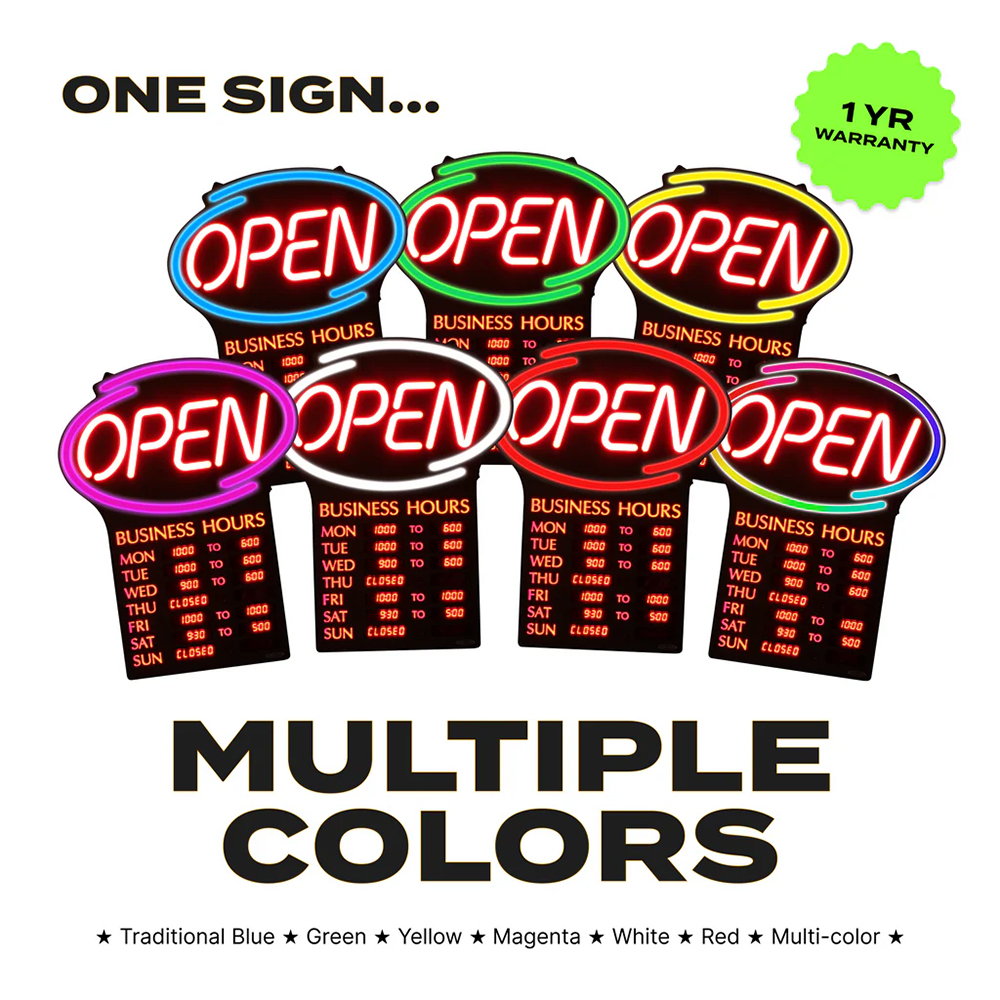
How a sign handles the physical retail environment matters. Busy storefronts experience accidents, aggressive window cleaning, and strict leasing regulations. You need a display built to survive your specific location.
Fragility remains a massive concern for traditional buyers. Glass breaks easily during long-distance shipping. Installation poses distinct dropping risks. Most commonly, routine window cleaning leads to shattered tubes. A careless squeegee bump destroys expensive letters instantly. Acrylic and silicone builds are entirely shatterproof. They handle accidental bumps easily.
Lifespans vary greatly between the two. Undamaged glass tubes last exceptionally long. They routinely shine for over ten years if left completely undisturbed. Solid-state chips degrade predictably over time. They typically rate for 30,000 to 50,000 hours of continuous use before dimming noticeably. A highly durable LED open sign provides peace of mind against accidental breakage.
Safety regulations often surprise new business owners. We must evaluate heat and electrical risks.
Heat Emission: Electrified gas runs warm. Certain transformers get hot to the touch. Solid-state chips remain exceptionally cool, preventing accidental burns.
Voltage Risks: High-voltage transformers carry inherent electrical risks. Modern alternatives operate on safe, low-voltage direct current.
Lease Restrictions: Many commercial landlords restrict high-voltage displays in unmonitored windows. Insurance policies might penalize unapproved glass installations due to fire risks.
Best Practice: Always review your commercial lease agreement and local fire codes before mounting any high-voltage transformer near flammable window displays or fabric curtains.
Your final choice should align directly with your business goals. Different storefronts require different strategies. Review the frameworks below to match your operational needs to the right technology.
Your primary goal involves maximizing daytime foot traffic in a busy, highly competitive retail strip.
Your current budget remains strict, requiring a low-maintenance, easy-to-hang solution immediately.
You want programmable features, including remote controls, flashing modes, and brightness dimming for different times of day.
Your storefront faces direct afternoon sunlight, requiring intense, directional light output to remain visible.
Your brand identity relies heavily on authenticity, vintage aesthetics, or a premium atmospheric feel.
You plan to use the display as an interior focal point placed safely behind a bar or in a protected window where it avoids physical bumps.
You possess the budget for a higher upfront cost and accept the possibility of specialist maintenance.
You want to project a high-end, artisan image. If you prefer to understand the specific manufacturing differences behind a premium neon open sign, always research specialized fabricators thoroughly.
Modern electronic displays win decisively on practicality. They offer a cost-effective, feature-rich, and durable solution. We find they suit about 90% of standard retail businesses perfectly. They cut through daylight glare, save money on energy bills, and eliminate shattered glass headaches. However, genuine glass remains a premium, irreplaceable asset. It sells nostalgia perfectly. It establishes an authentic atmosphere that modern silicone tubing simply cannot replicate.
Your next step requires immediate action. Measure your storefront window dimensions carefully. Review your local city ordinances regarding flashing or high-lumen signage. Finally, prioritize your budget before making a purchase. A well-placed, highly visible sign pays for itself quickly through increased daily foot traffic.
A: Yes, they are often brighter. Solid-state diodes produce highly directional light. This makes them much more visible in direct sunlight. However, the light pushes forward rather than dispersing in a full 360-degree ambient glow.
A: They use significantly more power than modern electronic alternatives due to high-voltage transformers. However, running a standard-sized glass window display remains relatively inexpensive compared to operating large commercial building lighting.
A: Technically, you can repair individual diodes. However, the labor cost to open the silicone and solder new chips often exceeds the price of buying a brand-new unit. Most owners treat cheap units as disposable.
A: Yes. Many municipalities ban flashing, strobe, or highly luminous signage facing public roads. Cities enact these ordinances to prevent driving distractions. Always check your local zoning laws before purchasing a dynamic display.


