

close
Choose Your Site
Global
Social Media
Views: 0 Author: Site Editor Publish Time: 2026-08-31 Origin: Site


A direct correlation exists between exterior visibility and increased customer foot traffic. For hospitality venues, bright signage acts as an undeniable beacon. It successfully draws patrons inside from crowded streets. You rely on visual cues to stand out. However, venue owners frequently overspend on purely aesthetic displays. These setups often fail prematurely due to harsh environmental exposure. Sometimes they violate strict local zoning laws. Other times, they trigger massive, unexpected maintenance bills.
This guide offers a purely evaluative framework for your business. We will help you select the optimal Lighting Bar Signs based on durability, operational safety, and exact technical specifications. You will learn how to prioritize long-term return on investment over short-lived visual trends. By focusing on proven hardware criteria, you can avoid costly purchasing mistakes. Your venue deserves illumination built for commercial realities. Let us explore how to evaluate these critical physical assets.
LED flex neon has largely replaced traditional gas neon due to a 70%+ reduction in energy consumption and lower fragility.
Exterior signage requires a minimum Ingress Protection (IP) rating of IP65 to survive sustained weather exposure.
Commercial installations must prioritize UL-listed signs to comply with municipal safety codes and commercial insurance policies.
Strategic placement dictates sign type: high-lumen signs for facades, edge-lit or programmable signs for interior social media engagement.
You must understand the physical materials before investing in commercial signage. We categorize modern illumination into three primary technologies. Each material presents distinct operational realities. By analyzing their physical properties, you can match the technology directly to your venue requirements.
Traditional gas neon provides unmatched authentic retro aesthetics. Heritage venues frequently deploy it for high-end bespoke branding. Glassblowers bend heated tubes into custom shapes. They fill these tubes using specific noble gases. An electrical charge then produces the iconic glow. Many high-end speakeasies prefer this classic approach.
However, you face severe risks adopting traditional neon. It demands a very high initial purchase cost. Glass tubes exhibit significant fragility during shipping and installation. You must hire specialized technicians for gas refills. Transformer maintenance also requires licensed professionals. Furthermore, gas neon draws exceptionally high energy. It generates substantial heat during operation. You must weigh these maintenance burdens carefully.
Best Practice: Restrict gas neon to indoor, highly protected spaces. Keep it out of reach from patrons to prevent accidental breakage.
Modern bars widely adopt LED flex neon for scalable signage. This technology supports budget-conscious operational models. Manufacturers encase flexible light-emitting diodes inside silicone or PVC jackets. It closely mimics traditional glass neon. You can deploy these units effectively indoors or outdoors.
LED technology mitigates most traditional risks. These units produce minimal heat output. You can expect a lifespan of up to 50,000 hours. The flexible silicone makes them virtually shatterproof. They survive accidental impacts easily. However, you must watch out for one major caveat. Low-quality acrylic backings often yellow under prolonged UV exposure. Always specify UV-resistant acrylic for any window-facing installations.
Common Mistake: Purchasing cheap PVC-jacketed signs instead of food-grade silicone. PVC degrades and cracks quickly in outdoor environments.
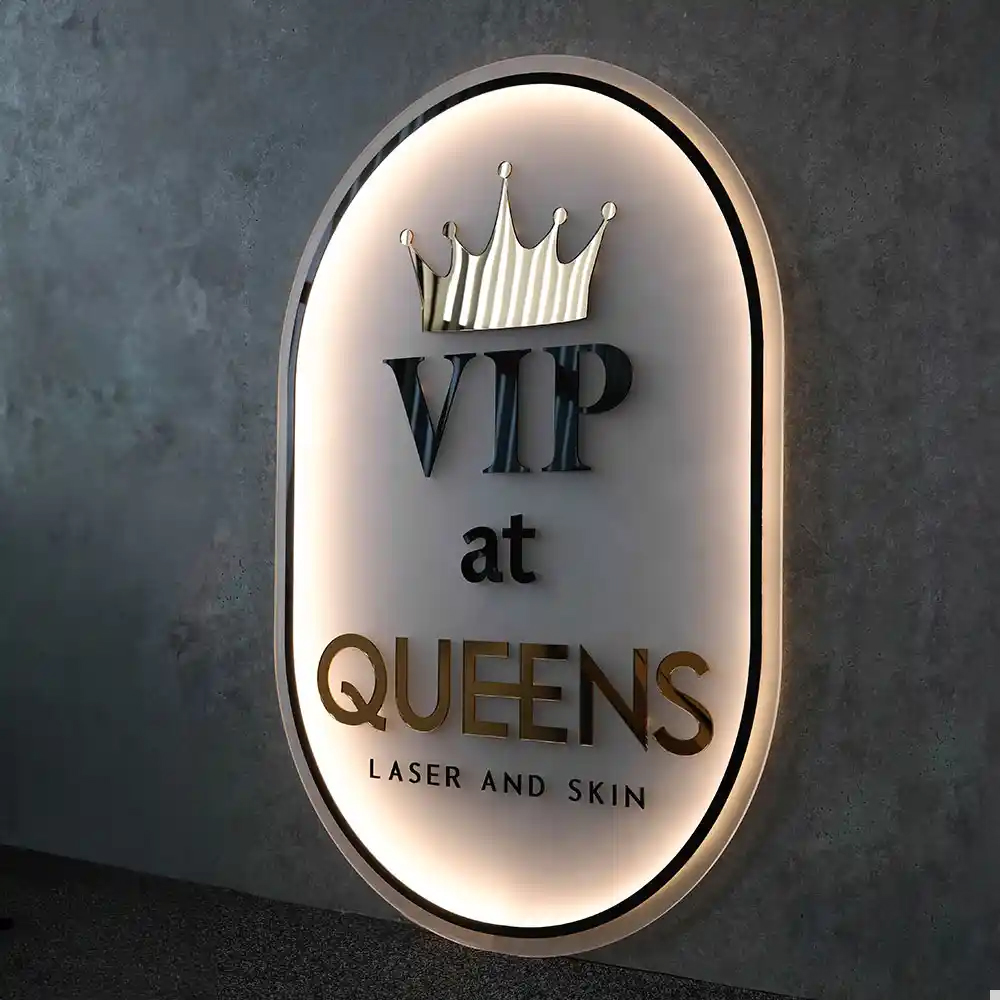
Lightboxes excel at displaying complex, multi-color brand logos. You should use them for highly detailed typography. Neon tubes simply cannot bend tight enough to accommodate intricate fonts. Lightboxes utilize an aluminum frame housing an acrylic face. Internal modules illuminate the graphic from behind or from the edges.
They deliver excellent readability from varied angles. Brand colors render accurately through printed vinyl overlays. However, these units demand frequent cleaning. Debris accumulation inside the casing drastically diminishes light output. Dead insects and dust often become trapped behind the acrylic face. You must schedule regular maintenance to keep them looking pristine.
You cannot purchase commercial signage based purely on visual mockups. We must evaluate feature-to-outcome metrics. This analytical approach helps avoid costly purchasing mistakes. Focus intensely on brightness, physical durability, and operational efficiency.
You must rigorously assess daylight visibility. Window-facing signs require significantly higher lumen density. They must combat intense sun glare. Dark-room interior signs require far less intensity. A sign appearing brilliant in a dark workshop might become invisible behind a sunny storefront window.
Always include programmable dimmers in your hardware specification. Ambient light shifts drastically from sunny afternoons to late nights. Dimmers allow you to adjust intensity accordingly. Blinding your evening patrons ruins the venue atmosphere. Proper lumen management ensures your LED Bar Sign remains legible and attractive at all hours.
Ingress Protection (IP) ratings dictate where you can safely install electronic equipment. The first number indicates dust protection. The second number indicates liquid protection. You must match the IP rating to the physical environment.
For standard indoor conditions, IP20 is entirely sufficient. It protects against basic dust but offers no water resistance. For outdoor deployments, you must mandate IP65. This rating ensures the sign is highly water-resistant. It survives direct rain and snow. For extreme weather locations, upgrade to IP67. This submersion-rated standard prevents electrical shorts and internal corrosion.
Standard Ingress Protection Requirements
Deployment Zone | Minimum IP Rating | Protection Level |
|---|---|---|
Interior Walls | IP20 | Basic dust protection. No liquid defense. |
Covered Patios | IP44 | Protection against splashing water. |
Exposed Facades | IP65 | Protection against low-pressure water jets (rain). |
Extreme Climates | IP67 | Temporary submersion protection. Highly sealed. |
Power consumption impacts your monthly overhead directly. You should compare continuous wattage draw across technologies. Traditional neon often requires 400 watts or more per unit. It relies on high-voltage transformers. This creates a noticeable spike in energy usage.
Modern alternatives operate much more efficiently. LED equivalents typically draw only 60 to 100 watts. Evaluate this difference over a standard 12-hour operational shift. The energy reduction directly improves venue profitability. Furthermore, lower wattage means less heat generation. This eases the burden on your internal HVAC systems during summer months.
Safety compliance protects your business from devastating fines and legal liabilities. You must prioritize authoritativeness in your purchasing decisions. Ignoring municipal codes frequently results in mandatory removal orders. We will outline the critical regulatory hurdles.
You must ensure all power supplies carry appropriate certifications. Signage components need UL-certification in North America or CE-marking in Europe. These marks prove the hardware passed rigorous independent safety testing. They guarantee baseline electrical stability.
Never install non-certified electrical components. They pose a severe fire hazard. More importantly, uncertified electronics can entirely void your commercial property insurance. If a fire occurs, investigators will check the signage certifications. Do not risk your entire business operation to save a few dollars on unrated power supplies.
Safety Checklist:
Verify the UL registration number on the physical power adapter.
Ensure the wiring gauge supports the total amperage load.
Confirm the installation includes a dedicated, grounded circuit.
Keep all certification documentation filed for fire marshal inspections.
Local municipalities heavily regulate exterior commercial lighting. You must address the serious risk of light trespass. Light trespass occurs when your signage illumination spills into nearby residential windows. Angry neighbors frequently complain to city planners. This often triggers immediate code enforcement actions.
Many cities actively enforce strict Dark Sky ordinances. These rules limit upward light pollution. They also place specific limits on flashing or strobe capabilities. Always consult your local zoning codes before purchasing dynamic RGB signs. Some districts outright ban moving or chasing light patterns. Secure municipal approval before finalizing your exterior hardware order.
Strategic placement solves core business problems. You must frame installation as a physical implementation strategy. Where you place the illumination matters as much as the technology itself. We divide venue placement into three critical zones.
Your facade serves as the primary hook. It must capture vehicular and pedestrian traffic from a distance. We recommend high-contrast, brand-name signage. Design it specifically for clear legibility at fifty yards or more.
Avoid intricate script fonts on the exterior. They blur together at a distance. Stick to bold, highly illuminated block lettering. Position it high enough to avoid vandalism. Ensure no architectural features cast shadows over the letters during daytime hours. This exterior beacon works tirelessly to announce your presence.
Window displays act as the immediate lure. They convert passing pedestrians into paying patrons. Position these indicators at exact eye level. People walking past looking at their phones will notice them in their peripheral vision.
Deploy Status Indicators: Use clear Open/Closed displays to remove entry hesitation.
Highlight Specialties: Hang secondary text like "Cocktails," "Draft Beer," or "Live Music."
Maintain Sightlines: Never block the view inside. People want to see a busy, welcoming interior before entering.
Interior feature walls function as powerful social multipliers. You should design selfie-friendly aesthetic pieces. Place them in designated low-glare zones. This encourages rapid user-generated content on platforms like Instagram and TikTok.
Mount these displays against dark or textured backgrounds. Exposed brick or dark wood paneling works perfectly. Avoid placing them opposite large windows to prevent glare in photographs. A clever, localized phrase often performs better than a generic brand logo. Your patrons will market your venue voluntarily if you provide the right visual backdrop.
Selecting the right manufacturing partner ensures a smooth deployment. You must exercise strict shortlisting logic. Avoid vendors selling purely on aesthetic emotion. We focus instead on tangible deliverables and transparent pricing structures.
You must balance the initial purchase price against inevitable hidden fees. A cheap unit often becomes expensive once you calculate logistics. Installation fees vary wildly depending on sign complexity. Specialized mounting hardware rarely comes included in budget quotes. You will need standoffs, mounting rails, and specialized anchors.
Shipping costs also demand close scrutiny. This proves especially true for fragile glass neon. Freight carriers charge massive premiums for insuring delicate glass tubes. International air freight for large displays can easily exceed the cost of the hardware itself. Always demand landed quotes including all transit and crating fees.
Warranties reveal the true quality of the internal components. You should immediately reject vendors offering less than a one-year warranty. Commercial environments run hardware hard. A short warranty indicates cheap, disposable electronics.
Standard reputable warranties sit comfortably at two to three years. They should cover both the diode failure and the power supply degradation. Read the fine print carefully. Some warranties require you to ship the broken unit back overseas at your own expense. Look for partners offering localized replacement parts.
Prioritize manufacturers who provide comprehensive, highly detailed spec sheets. They should clearly list exact lumen output. They must declare the specific IP rating. They should also detail the acrylic backing thickness. Six-millimeter acrylic resists warping far better than thin three-millimeter variants.
Avoid vendors selling purely on visual mockups. A beautiful Photoshop rendering tells you nothing about thermal management. Ask for close-up photographs of the wiring connections. Check how they seal the end caps. Rigorous vetting prevents premature hardware failure in your venue.
Selecting commercial illumination requires balancing aesthetic desires against operational realities. You must match the technology directly to your venue brand. However, you should always let safety compliance and technical specifications dictate the final purchase. Prioritize UL-listed components and appropriate weather ratings above all else. Proper strategic placement will ensure maximum visibility and increased foot traffic.
Take these actionable next steps before ordering:
Audit your proposed installation location to confirm access to dedicated power circuits.
Measure the exact available square footage to ensure proper scaling and readability.
Check local municipal zoning codes regarding brightness and flashing limits.
Request comprehensive technical spec sheets from at least three different vendors.
A: Pricing tiers vary drastically based on technology and scale. Standard off-the-shelf LED units typically range between $200 and $500. Large, custom outdoor displays require heavier materials and higher weatherproofing. These bespoke commercial installations generally cost between $800 and $3,000 or more, excluding installation fees.
A: LED technology usually proves superior for operational efficiency. It offers extreme durability, lower safety risks, and minimal energy consumption. It will not shatter if accidentally struck. However, traditional glass neon remains unmatched for heritage venues seeking an authentic, nostalgic glow and premium bespoke craftsmanship.
A: Yes, exterior commercial installations almost always require formal approval. You typically need written landlord consent first. Following that, you must secure a municipal sign permit. Local jurisdictions enforce strict rules regarding size, brightness, and structural mounting safety. Always check local codes before purchasing.
A: High-quality commercial units boast a benchmark lifespan of 40,000 to 50,000 hours of continuous use. This translates to several years of standard operational shifts. Notably, external power supplies usually fail long before the light-emitting diodes degrade. You can easily replace the adapter to extend the unit's life.


